
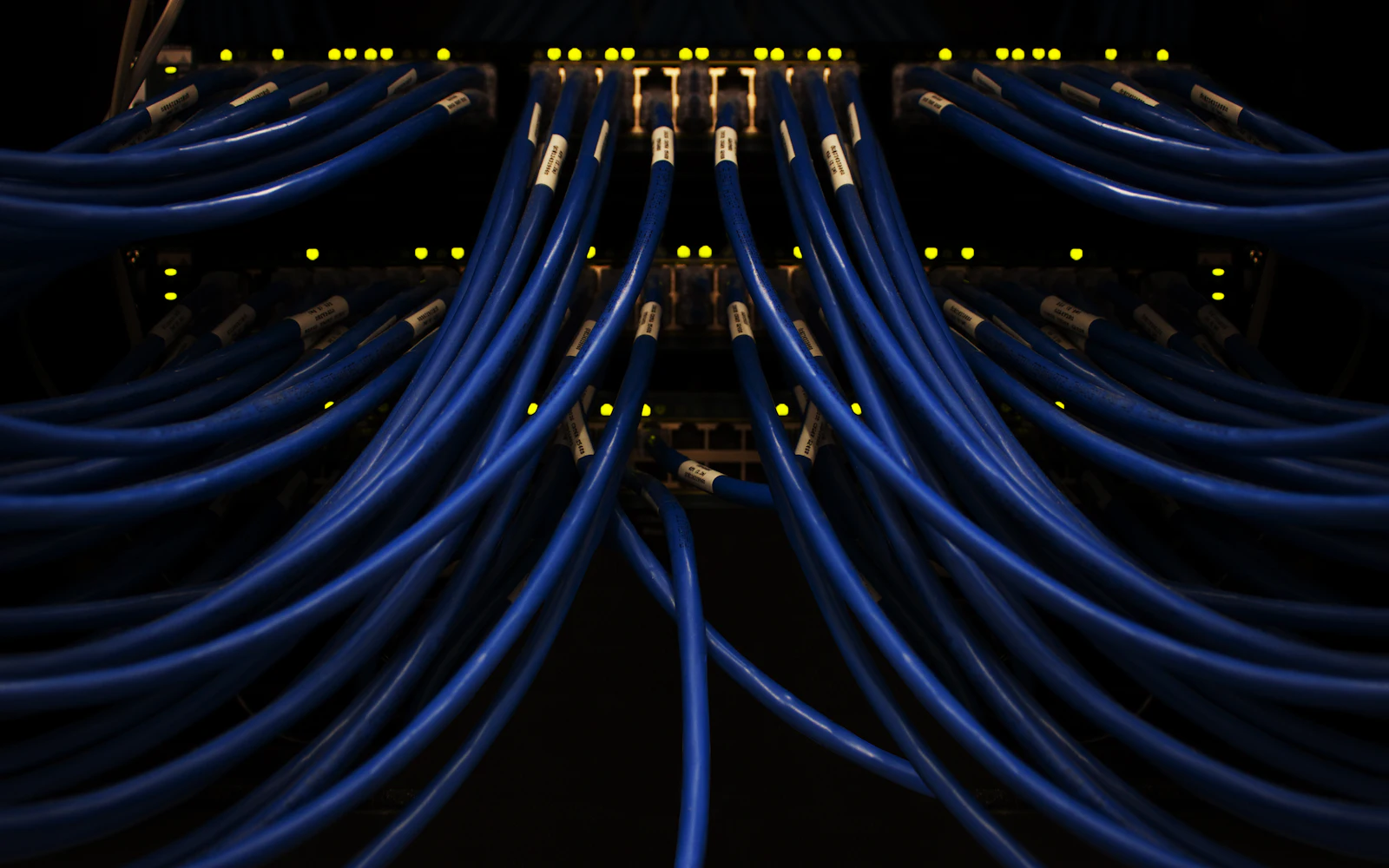
Most network faults we are called to are not the internet provider or the switch. They are a crushed cable, a loose termination or a patch lead nobody can trace. Structured cabling is the discipline that prevents them.
Choose the right cable
- Cat6 carries gigabit speeds comfortably and is the sensible default for most offices.
- Cat6A supports 10 gigabit over the full 100 metre run and suits new builds, server rooms and high-capacity Wi-Fi access points.
- Keep every horizontal run under 90 metres of permanent cable, leaving room for patch leads.
- Use outdoor-rated cable outside, and fibre between buildings: copper between buildings invites lightning damage.
Terminate into patch panels
Every cable ends on a patch panel in a cabinet, never plugged straight into a switch. Short patch leads then connect panel to switch. Moves and changes become a two-minute job instead of a re-cable.
Label everything
Each outlet and its panel port share a label, recorded on a floor plan. It sounds tedious; it is what makes a fault a ten-minute fix.
Test and certify
Every run should be tested after installation, with the results kept. A cable that passes a simple continuity test can still fail at full speed.
Contain and protect
Use trunking, conduit or cable trays, keep data cables apart from mains power, and do not pack cabinets so tightly they overheat. A small fan or air conditioning in the server room pays for itself.