
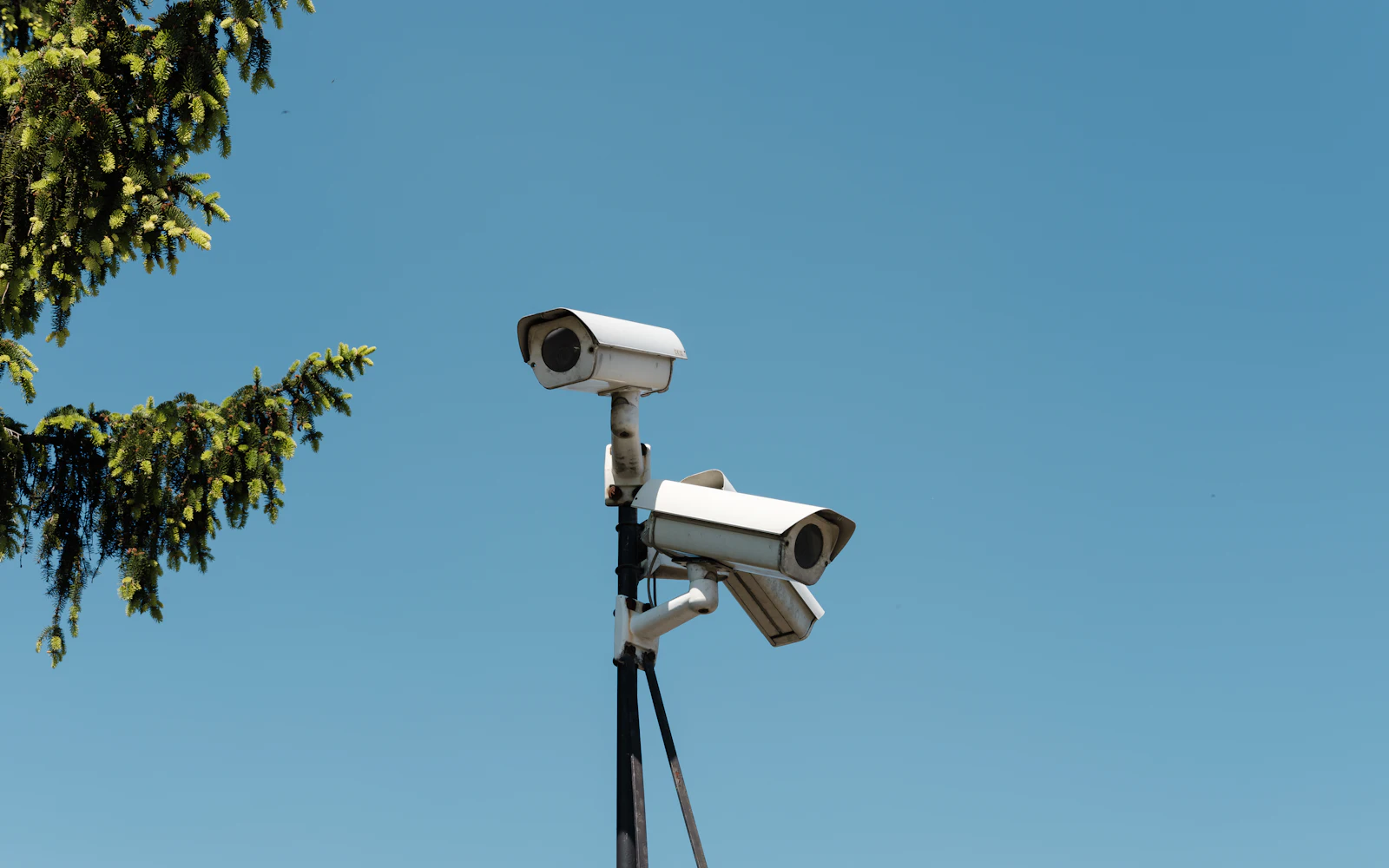
A camera is only as good as the footage it gives you on the day something happens. Before comparing brands, be clear what each camera is for: seeing that someone is at the gate, or recognising who it is. Those need very different cameras.
Resolution is not the whole story
More megapixels help, but only if the lens puts enough pixels on the target. A 4 MP camera covering a narrow doorway identifies faces far better than an 8 MP camera trying to cover a whole car park. Plan cameras by the job: wide views for overview, tighter views at entrances, tills and gates.
Lens and field of view
- Fixed wide lenses (around 2.8 mm) cover a large area close to the camera.
- Longer lenses (6 mm and up) see detail further away but over a narrower angle.
- Varifocal lenses can be adjusted at installation, which is useful when the right angle is not obvious until the camera is on the wall.
Night vision
Most cameras use infrared at night and switch to black and white. Check the stated IR range against the real distance to the area you need to see. Where colour at night matters, for example to describe a vehicle, consider colour night-vision models or add white lighting.
IP or analogue
IP cameras send video over a network cable, can be powered by PoE, and generally give better image quality and flexibility. Analogue (HD over coax) still makes sense when reusing existing coaxial cable. For new installations we usually recommend IP.
Built for the weather
Outdoor cameras should carry at least an IP66 rating against dust and heavy rain, and a vandal-resistant housing (IK10) where they are within reach. Coastal sites need corrosion-resistant fixings; salt air eats cheap brackets within a couple of years.
Storage
Decide how many days of footage you need to keep, then size the recorder's hard drives for it. Surveillance-rated drives are built to write around the clock; desktop drives are not.